
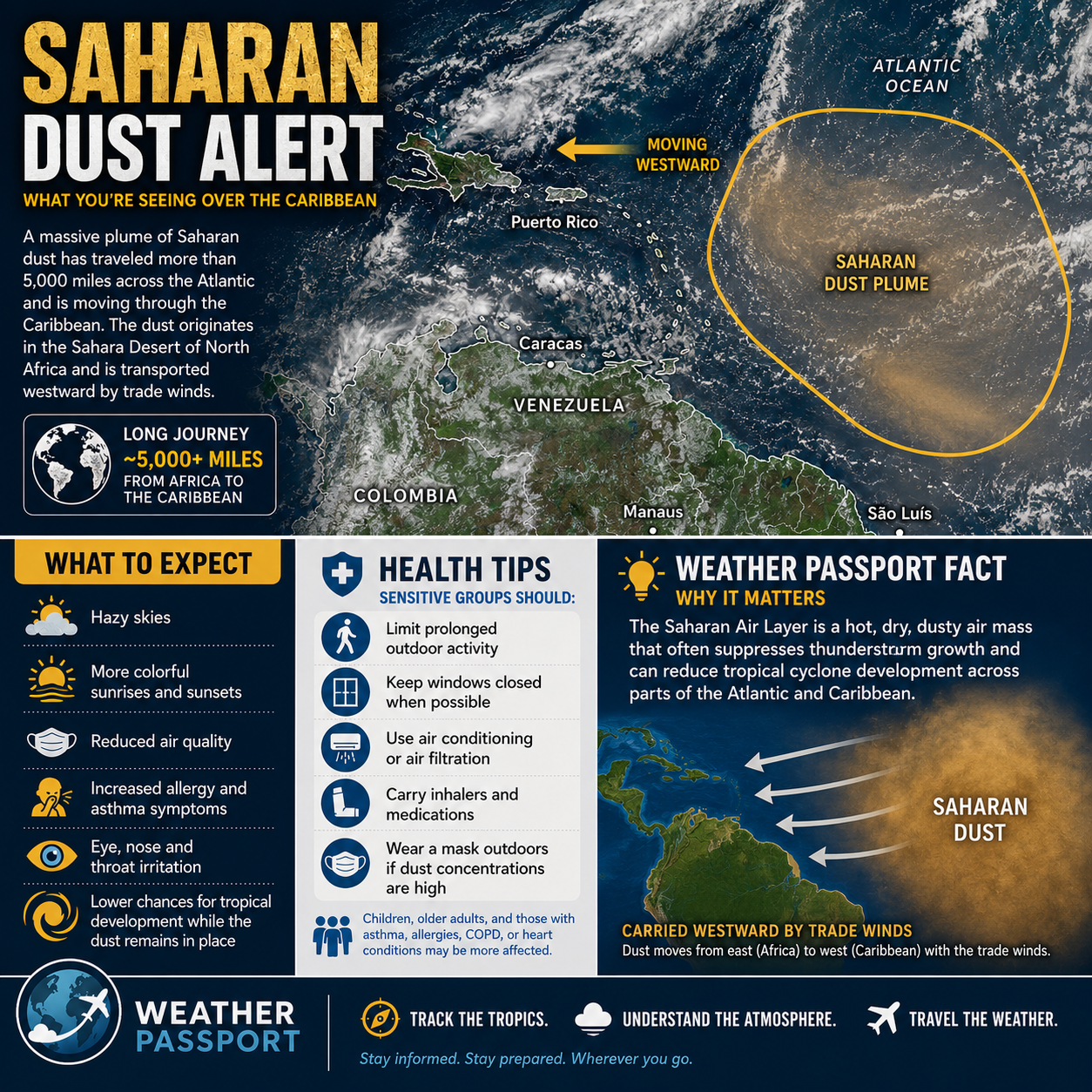
Visitors coming to the Caribbean during the summer months can typically expect bright sunshine, steady trade winds, and warm tropical weather. However, during certain times of the year—particularly late spring through summer—Aruba and the wider Caribbean may experience a natural atmospheric event known as a Saharan dust plume. A recent regional dust alert highlights that these conditions are currently affecting parts of the Caribbean, including nearby islands, and may influence visibility and air quality at times.
This blog explains what guests may notice during a dust event, what it means for their stay, and how to stay comfortable while enjoying the island.
What Is a Saharan Dust Plume?
A Saharan dust plume is a large mass of fine mineral dust that travels thousands of miles from the Sahara Desert in North Africa across the Atlantic Ocean. These events are seasonal and common in the Caribbean.
As the dust moves through the atmosphere, it can:
- Create hazy or milky skies
- Reduce long-distance visibility
- Temporarily lower local air quality
- Contribute to vivid sunrises and sunsets
While it may sound dramatic, it is a natural and recurring weather pattern.

What Guests May Notice
During a dust event, visitors may experience:
Hazy skies
The sky can appear less blue and more muted or grayish, especially during midday hours.
Reduced visibility
Views across the island or out to sea may look slightly blurred or softened.
Brighter sunsets
Dust particles in the atmosphere often scatter light, creating especially colorful sunsets—often one of the unexpected highlights of the experience.
Breezy, dry conditions
Dust events often coincide with stronger trade winds, which are typical for Aruba.
Health Considerations
Most travelers will not experience serious issues, but fine dust particles can irritate sensitive individuals. Regional health authorities typically advise caution because Saharan dust can irritate the lungs and make breathing more difficult for some people.
Those who may be more sensitive:
- Guests with asthma or other respiratory conditions
- Individuals with allergies
- Young children and older adults
Possible mild symptoms:
- Dry throat or eyes
- Sneezing or coughing
- Mild sinus irritation
Tips for a Comfortable Stay
If dust conditions are present during your visit, simple adjustments can help you stay comfortable:
- Stay hydrated throughout the day
- Limit prolonged outdoor exertion if you are sensitive
- Use sunglasses to reduce eye irritation from wind and dust
- Keep windows closed in your accommodation when winds are strong
- Use air conditioning or air purifiers if available
- Carry any prescribed inhalers or allergy medications
Most visitors continue to enjoy beaches, dining, and excursions without interruption.
Impact on Your Vacation Experience
Importantly, Saharan dust events are temporary and do not typically disrupt travel operations or daily activities. Flights, hotels, tours, and beaches continue to operate normally.
In fact, many guests find that these events add a unique visual character to the island—especially at sunrise and sunset, when the sky can take on deep oranges, pinks, and gold tones.