
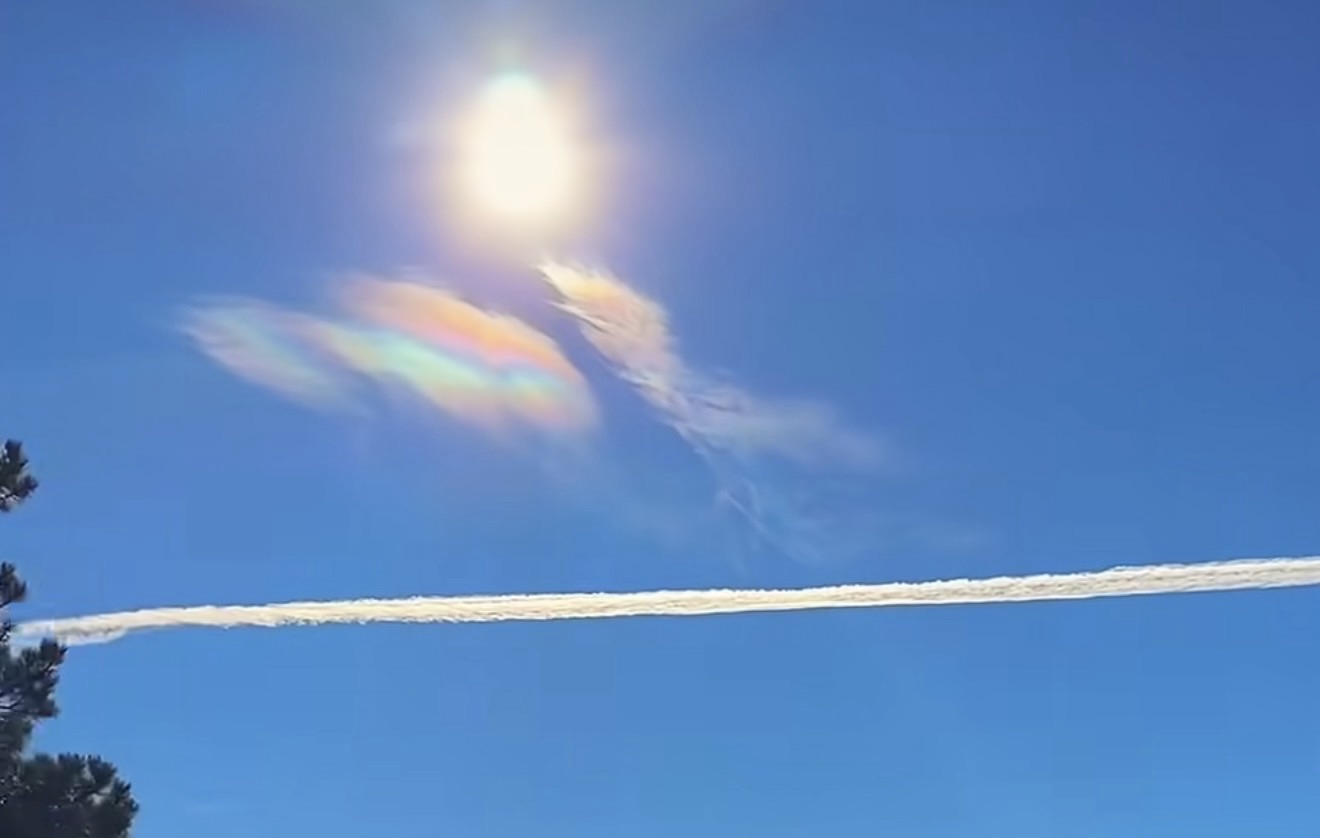
High above the Front Range of the Rocky Mountains, the sky often performs a quiet spectacle. Thin clouds shimmer with soft bands of pastel color — pinks, greens and blues that seem painted onto the sky. This phenomenon, known as cloud iridescence, is both delicate and fleeting, and few places in the continental United States offer a better backdrop for it than the highway climbing toward Pikes Peak, known as America’s Mountain.
Cloud iridescence occurs when sunlight passes through very small water droplets or ice crystals within thin clouds, most often cirrocumulus or altocumulus clouds. When the droplets are nearly uniform in size, they diffract, or bend, the sunlight. This bending causes the light waves to interfere with one another, separating white light into subtle bands of color. Unlike rainbows, which form opposite the sun, cloud iridescence appears near the sun itself and can change from moment to moment as the clouds shift.
The conditions required for iridescence are precise, which makes the phenomenon relatively rare. The clouds must be thin, the droplets small and evenly sized, and the sun positioned just right. Mountain environments are especially favorable because rising air currents, known as orographic lift, push moist air upward, cooling it and forming the thin, high clouds that can produce iridescent displays.
The drive up the Pikes Peak Highway offers a front-row seat to these atmospheric events. The 19-mile toll road climbs from the foothills west of Colorado Springs to the summit of Pikes Peak, reaching an elevation of 14,115 feet. Along the way, travelers pass through multiple ecological zones, from ponderosa pine forests to alpine tundra, all while the sky seems to expand with every mile gained.
What makes the Pikes Peak area so unique is the dramatic interaction between geology, weather and altitude. Pikes Peak rises abruptly from the plains, creating sharp elevation changes over a short distance. This steep rise influences local weather patterns, often producing rapidly changing conditions. Clear skies at the base can give way to wind, clouds or snow near the summit, sometimes within the span of an hour.
As the highway climbs, the effects of elevation become increasingly noticeable — not just in the scenery, but in the human body. At sea level, oxygen is abundant. At more than 14,000 feet, the air pressure drops significantly, meaning each breath delivers far less oxygen. For some visitors, this can lead to altitude sickness, with symptoms that include dizziness, headaches, nausea and shortness of breath.
In more severe cases, the lack of oxygen can cause people to lose consciousness. There have been documented instances of visitors becoming lightheaded or passing out near the summit, particularly if they ascend too quickly or exert themselves without acclimating. Even walking short distances can feel strenuous at that height. That is why visitors are encouraged to hydrate, move slowly and pay attention to how their bodies respond as they climb.
The thin air also plays a role in the sky’s appearance. With less atmosphere above, sunlight can appear more intense, and clouds can seem closer and more textured. When conditions align, iridescent clouds may form above the peak or along the ridgelines, their colors standing out sharply against the deep mountain blue of the sky.