
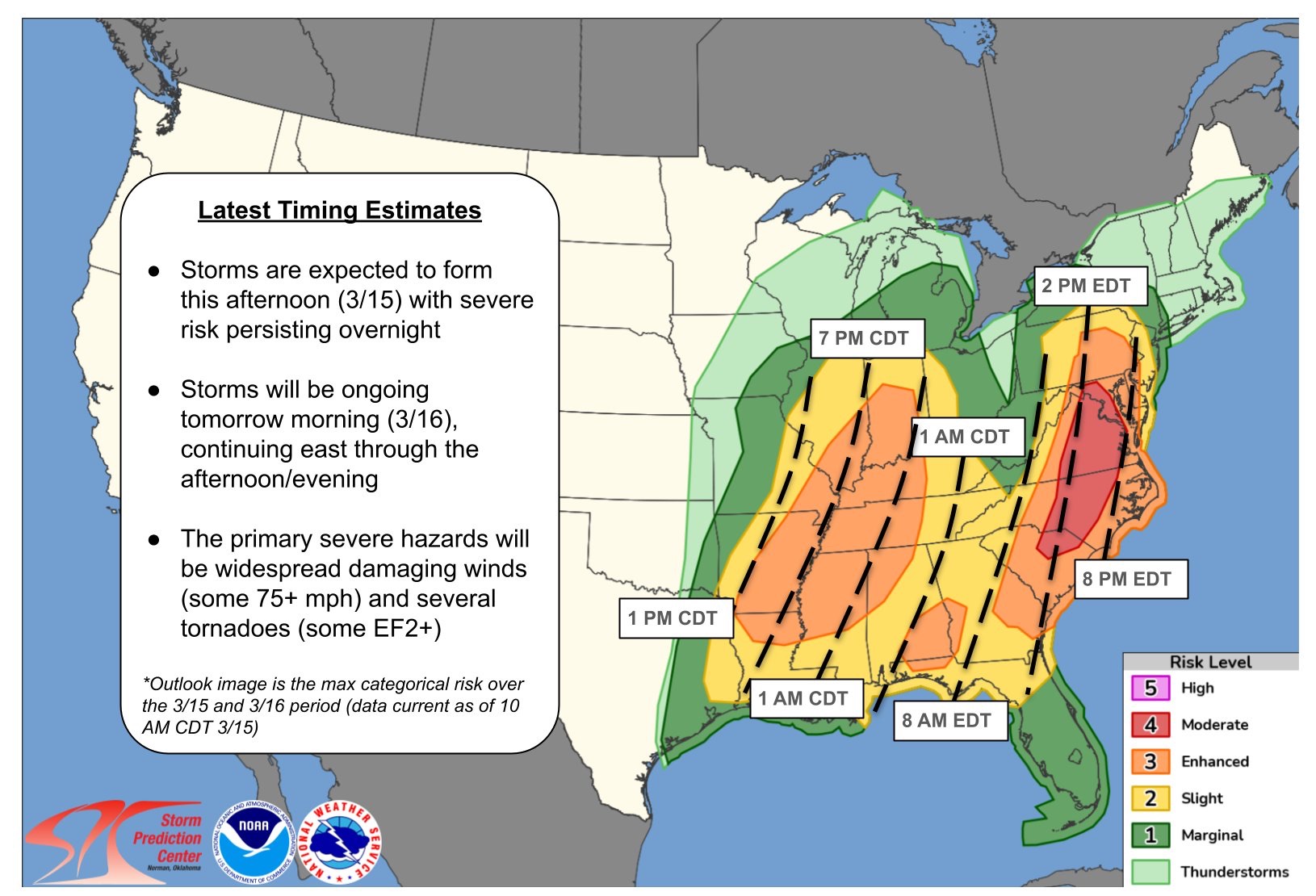
A fast-moving, powerful cold front is set to sweep the Eastern Seaboard on Monday bringing the threat of tornadoes, damaging winds, and flash flooding to major travel corridors.
This is a storm that commands serious respect. It has already produced blizzard conditions in the Midwest, and severe weather Sunday, and it will deliver a fast, powerful punch to the East Coast on Monday. If your travel can be moved — earlier in the day, or to Tuesday — that is the best choice. If you must travel, go early, go informed, and go prepared for disruption.

Check Your Airline’s Travel Waiver
Most major carriers — Delta, American, United — have issued or are expected to issue travel waivers allowing free rebooking. Call your airline or check their app before your travel day to rebook without a fee. Don’t wait for them to contact you.
Fly Early or Not at All Monday
The storm’s peak impact window is 3–8 PM ET. Morning flights — especially departing before noon — have a substantially better chance of operating on schedule. If your flight is in the afternoon, proactively look at whether an earlier option is available.
Have a Backup Routing Plan
Because Atlanta, Charlotte, and DC are major connecting hubs, even travelers far outside the storm zone may find their connections disrupted. Know your alternate routing options and have hotel numbers ready in case you’re stranded overnight.
Monitor FAA Ground Stop Status
Check fly.faa.gov for real-time ground stops and delays by airport. This is the most authoritative source for what’s actually happening at each airport and is updated continuously throughout the day.
Northeast Rail Corridor: Plan for Delays
Amtrak’s busy Northeast Corridor — connecting Washington, Philadelphia, New York, and Boston — runs directly through the storm’s path. High winds and flooding can trigger speed restrictions and service suspensions. If you’re planning to take the train between any of these cities on Monday afternoon or evening, check Amtrak.com for real-time service alerts before heading to the station.Consider re-booking to an early morning train or waiting until Tuesday if your schedule allows.
Don’t Drive During the Peak Window
Winds of 70–80 mph can overturn high-profile vehicles. If you’re driving along I-95, I-85, or I-81 in the Carolinas or Mid-Atlantic during the 3–8 PM window, pull off and wait it out. No destination is worth the risk.
Expect Tuesday Backlogs Too
When aircraft and crews are displaced by a major storm, recovery takes 24–48 hours. Even if you’re flying Tuesday morning, check your flight status. Delayed travelers from Monday may have already taken your backup options.
